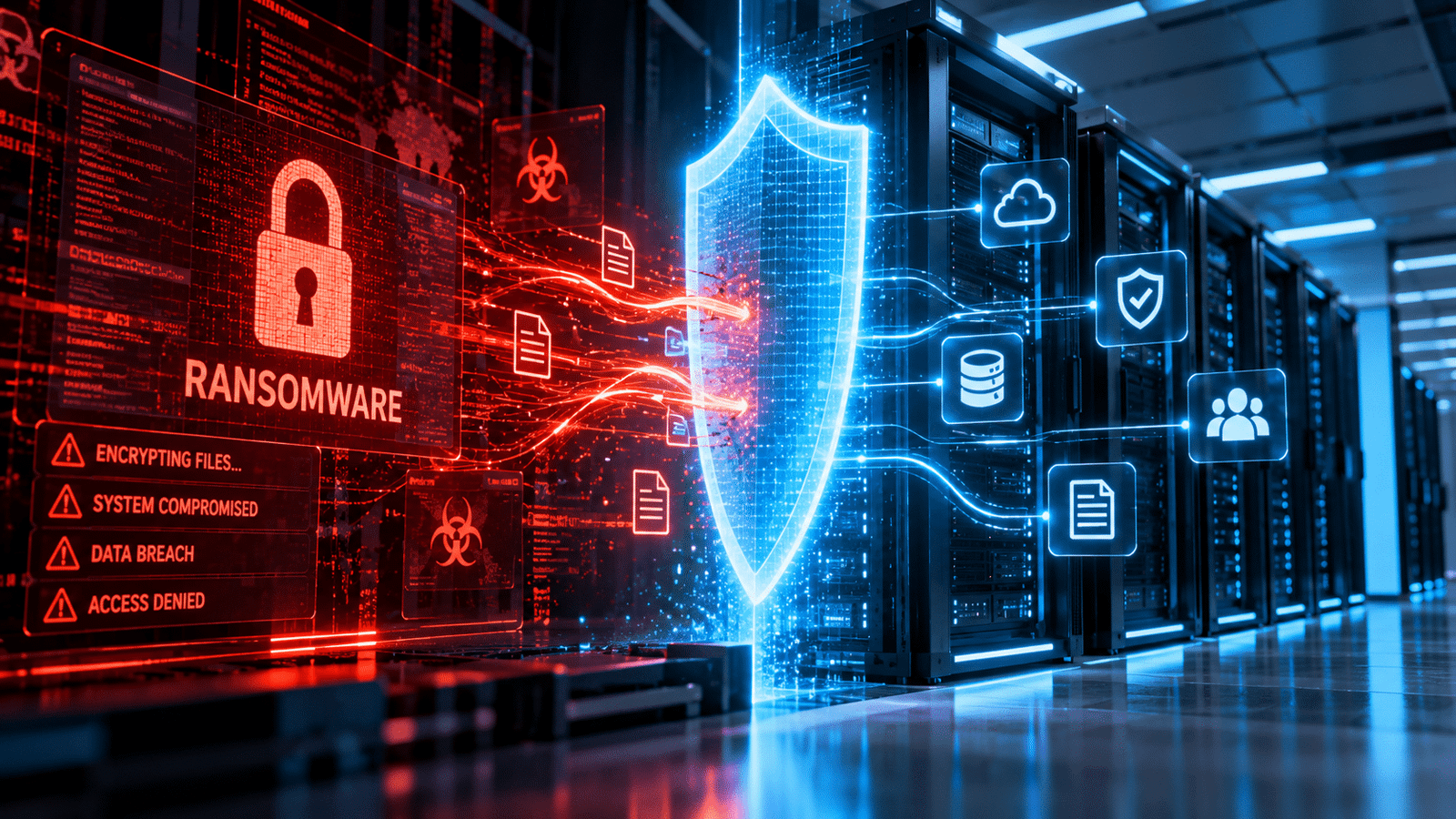

Ransomware remains one of the most disruptive cybersecurity threats facing businesses. An attack can interrupt operations, make critical systems unavailable, expose confidential information, and create significant financial and reputational consequences.
As organizations become more dependent on cloud applications, connected devices, and digital infrastructure, protecting against ransomware requires more than traditional antivirus software.
Emerging cybersecurity companies are responding with specialized technologies designed to prevent unauthorized activity, identify suspicious behavior, limit the spread of attacks, and help organizations recover when incidents occur.
These innovations are particularly relevant to small and mid-sized businesses that need advanced protection but may not have the resources to operate a large internal cybersecurity team.
Why Ransomware Remains a Serious Business Threat
Ransomware is a form of malicious software or cyberattack designed to deny access to systems or information, often through encryption, while attackers demand payment.
Modern ransomware incidents may also involve data theft, with criminals threatening to disclose confidential information unless their demands are met.
For businesses, the consequences can extend well beyond the immediate technical incident.
An organization may lose access to essential applications, experience interruptions to customer services, or face difficulties restoring important records.
Manufacturers may be unable to coordinate production. Healthcare providers may experience disruptions to administrative or clinical systems. Professional services companies may temporarily lose access to documents required for daily operations.
Even after systems are restored, organizations may need to investigate the incident, assess potential data exposure, and review their security controls.
This is why ransomware protection is increasingly considered part of operational resilience rather than simply an IT responsibility.
1. Preventing Unauthorized Applications From Running
One important approach to ransomware protection focuses on preventing malicious or unauthorized software from executing in the first place.
Traditional security tools frequently identify threats by analyzing known malware signatures or suspicious behavior.
Although these techniques remain valuable, attackers continually modify their tools and methods to evade detection.
Application allowlisting takes a different approach by defining which software is permitted to run within a protected environment.
When appropriately configured, this can reduce opportunities for unknown or unauthorized programs to execute.
Specialized cybersecurity providers are developing platforms that combine application control with additional restrictions on software behavior and system access.
For example, ThreatLocker focuses on technologies such as application allowlisting and endpoint privilege management to help organizations restrict unauthorized activity.
This approach illustrates how specialized security companies can compete by addressing a clearly defined problem rather than attempting to provide every possible cybersecurity capability.
However, application control requires careful implementation. Organizations need processes for approving legitimate software, managing updates, and avoiding unnecessary disruption to employees.
2. Detecting Suspicious Behavior Earlier
Preventing every attack is not realistic. Organizations also need technologies capable of identifying suspicious activity before it causes widespread damage.
Endpoint detection and response, commonly known as EDR, provides visibility into activity occurring on computers and other protected devices.
These solutions can help identify behaviors associated with malicious activity, such as unusual process execution, attempts to modify protected files, or suspicious use of administrative tools.
More advanced platforms may combine information from endpoints, identities, cloud environments, and network systems.
This broader approach can help security teams investigate incidents that involve several parts of an organization’s infrastructure.
Machine learning and behavioral analytics can assist with identifying unusual patterns, but automated detection is not infallible.
Security teams still need to investigate alerts, understand the business context, and determine the appropriate response.
For emerging cybersecurity companies, a major opportunity lies in making these capabilities more accessible and manageable for organizations with limited security resources.
3. Using AI to Support Ransomware Detection and Response
Artificial intelligence is increasingly incorporated into cybersecurity products to support threat analysis and operational efficiency.
AI-assisted systems can help organize security alerts, identify relationships between events, and summarize information for analysts.
In a ransomware investigation, this might involve correlating unusual account activity with suspicious processes running on several devices.
AI tools can also help security teams prioritize incidents based on available evidence and recommend investigative steps.
However, AI should not be presented as a guaranteed solution to ransomware.
Automated systems can produce inaccurate assessments, overlook malicious behavior, or generate false alarms.
Organizations should evaluate AI-powered security tools according to their actual detection capabilities, transparency, integration requirements, and operational performance.
The strongest applications combine automation with established security controls and human expertise.
4. Protecting Identities and Limiting Access
Ransomware attacks do not always begin with malicious software.
Attackers may obtain legitimate credentials through phishing, compromised accounts, or other forms of unauthorized access.
Once inside an organization, they may attempt to move between systems, obtain additional permissions, and access sensitive resources.
Identity security therefore plays a central role in ransomware prevention.
Important measures include:
- Implementing phishing-resistant multifactor authentication where possible.
- Restricting administrative privileges.
- Removing unnecessary access permissions.
- Monitoring suspicious account activity.
- Reviewing access when employees change roles or leave the organization.
- Protecting privileged and service accounts.
Emerging identity security companies are developing solutions that help organizations manage these controls across increasingly complex environments.
By limiting unnecessary privileges, businesses can reduce the opportunities available to attackers after an initial compromise.
This reflects a broader shift toward Zero Trust principles, in which access is explicitly verified rather than automatically trusted.
5. Containing Attacks Before They Spread
A ransomware incident can become significantly more damaging when attackers are able to move across an organization’s infrastructure.
Network segmentation and controlled access between systems can help limit this movement.
Instead of allowing every device or application to communicate freely with other resources, organizations can establish restrictions based on operational requirements.
For example, a compromised employee workstation should not automatically provide unrestricted access to critical production systems or backup infrastructure.
Some cybersecurity platforms can also isolate affected endpoints when suspicious activity is detected.
This can provide security teams with additional time to investigate and contain an incident.
However, automated containment must be configured carefully, particularly in environments where disconnecting a system could interrupt essential business processes.
For specialized cybersecurity providers, the challenge is to deliver effective containment without introducing unnecessary complexity.
6. Protecting Backups and Accelerating Recovery
Even organizations with strong preventive controls need to prepare for the possibility of a successful ransomware attack.
Reliable backups are an essential component of ransomware resilience.
However, maintaining copies of business information is not sufficient if attackers can delete, encrypt, or otherwise compromise those copies.
Organizations should consider backup strategies that include protected or immutable copies, appropriate separation from production systems, and regularly tested recovery procedures.
Recovery planning should also identify which applications and data are essential to business operations.
For example, restoring an organization’s customer database may be more urgent than recovering less critical internal files.
Specialized technology providers are developing backup security, data resilience, and recovery orchestration solutions designed to help businesses restore operations more effectively.
These tools can support recovery, but their value depends on preparation and testing before an incident occurs.
The U.S. Cybersecurity and Infrastructure Security Agency provides practical guidance through its StopRansomware initiative, including recommendations for prevention, response, and recovery.
7. Managed Security Services for Growing Businesses
Many small and mid-sized organizations cannot maintain a dedicated cybersecurity operations center or provide continuous monitoring with internal personnel alone.
Managed detection and response services, often referred to as MDR, offer an alternative.
These services combine security technology with specialist personnel who monitor threats, investigate suspicious activity, and assist with incident response.
For growing businesses, this can provide access to expertise without requiring the organization to build every capability internally.
Emerging cybersecurity companies are developing managed services focused on particular industries, technology environments, or business requirements.
However, companies evaluating MDR providers should understand the exact scope of the service.
Important questions include which systems are monitored, how incidents are escalated, what response actions the provider can perform, and which responsibilities remain with the customer.
Clear communication and documented response procedures are essential to making these arrangements effective.
Why Emerging Cybersecurity Companies Matter
The cybersecurity market includes established global vendors, but specialized and emerging companies continue to play an important role in technological innovation.
Smaller providers may concentrate on challenges that are difficult to address through broad, general-purpose security platforms.
Some focus on application control, while others specialize in identity protection, ransomware detection, secure backups, or incident response.
This specialization can make it easier for business customers to understand the problem a solution is designed to solve.
For example, a company struggling to manage administrative privileges may benefit from a dedicated privilege management platform.
Another organization may prioritize ransomware recovery because it operates systems that cannot tolerate prolonged downtime.
In both cases, the appropriate technology depends on the organization’s risks, infrastructure, and operational requirements.
Through Cyber Impact, Tech Impact explores the cybersecurity technologies and companies helping organizations address these evolving challenges.
How Businesses Should Evaluate Ransomware Protection Solutions
Organizations should avoid selecting cybersecurity products solely on the basis of marketing claims or the number of features advertised.
A more effective evaluation begins with understanding the organization’s existing security controls and identifying areas of greatest exposure.
Business leaders and IT teams should consider several questions:
- Prevention: How does the solution reduce the likelihood of unauthorized access or malicious software execution?
- Detection: Which types of suspicious activity can it identify?
- Response: What actions can be taken when a potential ransomware incident is detected?
- Integration: Will the solution work with existing applications, endpoints, and security platforms?
- Recovery: How does it support backup protection and business restoration?
- Management: Can the organization operate the solution with its available resources?
- Support: What technical assistance and incident response capabilities does the provider offer?
- Business value: Does the product address a meaningful risk without creating unnecessary operational complexity?
Where possible, organizations should test products in a controlled environment and evaluate their performance against realistic business scenarios.
Cybersecurity investments should also be reviewed periodically as the company grows and its technology environment changes.
Ransomware Protection Is Becoming a Business Resilience Strategy
The fight against ransomware is no longer limited to identifying malicious files.
Modern protection combines access control, endpoint security, threat monitoring, network restrictions, backup protection, and incident response planning.
Emerging cybersecurity companies are contributing to this evolution by developing specialized technologies that address different stages of an attack.
For businesses, the objective is not to achieve an unrealistic guarantee of complete protection.
It is to reduce the likelihood of successful attacks, limit their potential impact, and maintain the ability to recover essential operations.
As cyber threats evolve, organizations that treat security as part of their long-term business strategy will be better prepared to manage disruption and protect the systems on which they depend.
Cyber Impact, a special edition from the producers of Tech Impact, explores the companies, technologies, and strategies shaping the future of cybersecurity.
Discover more conversations with technology leaders in our episodes and interviews.